
Isaac Asimov books in order
American writer and biochemist
- Lived
- 1920–1992
- Country
- Russian Socialist Federative Soviet Republic
- Books
- 208
- Series
- 6
- Also writes as
- Paul French
Isaac Asimov published 75 novels, 8 novellas, 27 short story collections, 48 non-fiction books, 37 children's books and 13 other books, beginning with Pebble in the Sky (1950). The 6 series include Robot (12 books, starting with The Caves of Steel), Norby Chronicles (11 books, starting with Norby, the Mixed-Up Robot) and Foundation (10 books, starting with Foundation). The best-known is Foundation (1951).
Updated September 2026
Robot books in order (12)Series page
Reading order: 1 The Caves of Steel (1954) · 2 The Naked Sun (1957) · 3 The Robots of Dawn (1983) · 4 Robots and Empire (1985) · Runaround (1942) · Evidence (1946) · Mother Earth (1949) · I, Robot (1950) · The Rest of the Robots (1964) · The Bicentennial Man and Other Stories (1976) · … all 12 below
- 1.
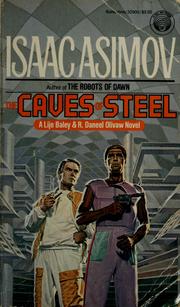
The Caves of Steel (Jun 1954)
- 2.

The Naked Sun (Jan 1957)
- 3.
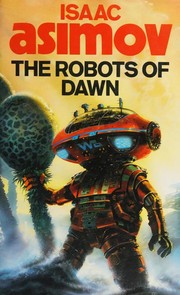
The Robots of Dawn (1983)
- 4.
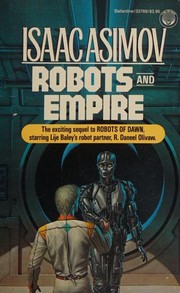
Robots and Empire (Sep 1985)
Runaround (Mar 1942)
Evidence (Sep 1946)

Mother Earth (1949)

I, Robot (Dec 1950)
The Rest of the Robots (1964)

The Bicentennial Man and Other Stories (1976)

Robot Dreams (1986)
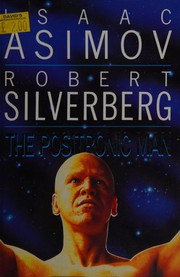
The Positronic Man (Oct 1992), with Robert Silverberg
Norby Chronicles books in order (11)Series page
Reading order: 1 Norby, the Mixed-Up Robot (1983) · 2 Norby's Other Secret (1984) · 3 Norby and the Lost Princess (1985) · 4 Norby and the Invaders (1985) · 5 Norby and the Queen's Necklace (1986) · 6 Norby Finds a Villain (1987) · 7 Norby Down to Earth (1989) · 8 Norby and Yobo's Great Adventure (1989) · 9 Norby and the Oldest Dragon (1990) · 10 Norby and the Court Jester (1991) · … all 11 below
- 1.
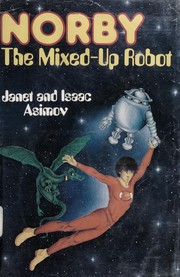
Norby, the Mixed-Up Robot (1983), with Janet Asimov
- 2.

Norby's Other Secret (1984)
- 3.
Norby and the Lost Princess (1985)
- 4.
Norby and the Invaders (1985)
- 5.
Norby and the Queen's Necklace (1986)
- 6.
Norby Finds a Villain (1987)
- 7.
Norby Down to Earth (1989)
- 8.
Norby and Yobo's Great Adventure (1989)
- 9.
Norby and the Oldest Dragon (1990)
- 10.
Norby and the Court Jester (1991)
- 11.
Norby and the Terrified Taxi (1997)
Foundation books in order (10)Series page
Reading order: 1 Foundation (1951) · 2 Foundation and Empire (1952) · 3 Second Foundation (1953) · 4 Foundation's Edge (1982) · 5 Foundation and Earth (1986) · 6 Prelude to Foundation (1988) · 7 Forward the Foundation (1993) · 8 Foundation's Fear (1997) · 9 Foundation and Chaos (1998) · 10 Foundation's Triumph (1999)
- 1.

Foundation (1951)
- 2.
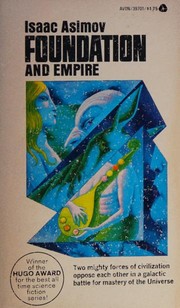
Foundation and Empire (1952)
- 3.
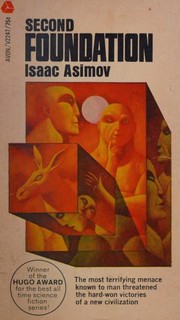
Second Foundation (1953)
- 4.
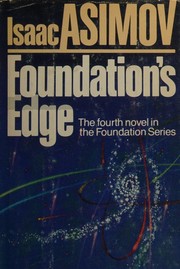
Foundation's Edge (Jun 1982)
- 5.
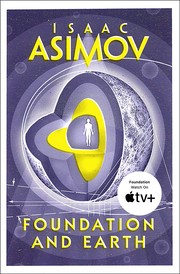
Foundation and Earth (Oct 1986)
- 6.
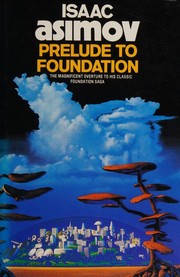
Prelude to Foundation (May 1988)
- 7.
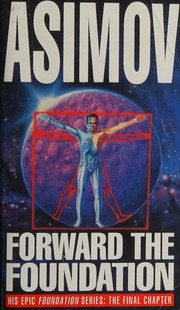
Forward the Foundation (Apr 1993)
- 8.
Foundation's Fear (1997)
- 9.
Foundation and Chaos (1998)
- 10.
Foundation's Triumph (1999)
Lucky Starr books in order (6)Series page
Reading order: 1 David Starr, Space Ranger (1952) · 2 Lucky Starr and the Pirates of the Asteroids (1953) · 3 Lucky Starr and the Oceans of Venus (1954) · 4 Lucky Starr and the Big Sun of Mercury (1956) · 5 Lucky Starr and the Moons of Jupiter (1954) · 6 Lucky Starr and the Rings of Saturn (1958)
- 1.
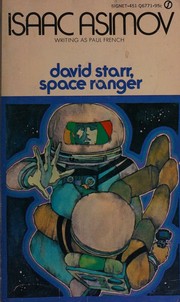
David Starr, Space Ranger (Jan 1952)
- 2.
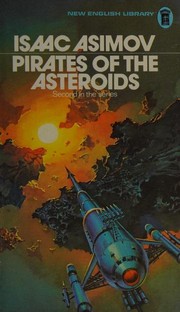
Lucky Starr and the Pirates of the Asteroids (Nov 1953)
- 3.
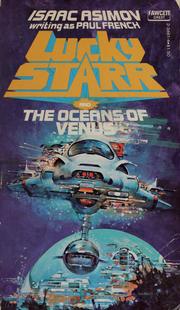
Lucky Starr and the Oceans of Venus (1954)
- 4.

Lucky Starr and the Big Sun of Mercury (Mar 1956)
- 5.

Lucky Starr and the Moons of Jupiter (1954)
- 6.

Lucky Starr and the Rings of Saturn (1958)
Black Widowers books in order (6)Series page
Reading order: 1 Tales of the Black Widowers (1974) · 2 More Tales of the Black Widowers (1976) · 3 Casebook of the Black Widowers (1980) · 4 Banquets of the Black Widowers (1984) · 5 Puzzles of the Black Widowers (1990) · 6 The Return of the Black Widowers (2003)
- 1.

Tales of the Black Widowers (1974)
- 2.

More Tales of the Black Widowers (1976)
- 3.

Casebook of the Black Widowers (1980)
- 4.
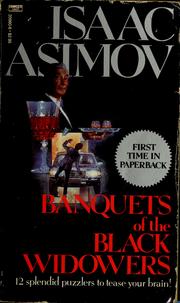
Banquets of the Black Widowers (1984)
- 5.

Puzzles of the Black Widowers (1990)
- 6.
The Return of the Black Widowers (2003)
Galactic Empire books in order (3)Series page
Reading order: 1 Pebble in the Sky (1950) · 2 The Stars, Like Dust (1951) · 3 The Currents of Space (1952)
- 1.
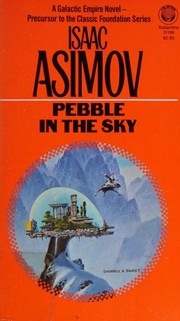
Pebble in the Sky (Jan 1950)
- 2.
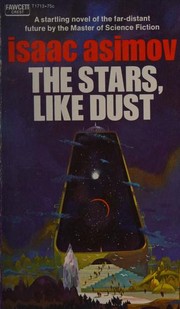
The Stars, Like Dust (1951)
- 3.
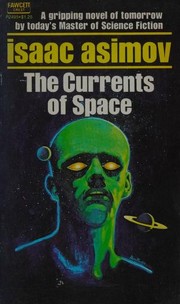
The Currents of Space (1952)
Where to start with Isaac Asimov
Start here
Foundation
Isaac Asimov's most-read book and the first of the 10 Foundation books.
Highest rated
Second Foundation
Rated 4.3 out of 5 by 141 readers.
Shortest way in
Pebble in the Sky
One of the most-read, at about 223 pages.
Standalone novels in order
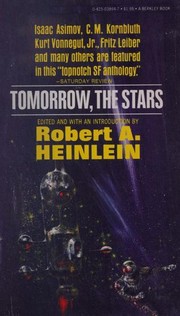
Tomorrow, the Stars (1952)
Sucker Bait (1954)
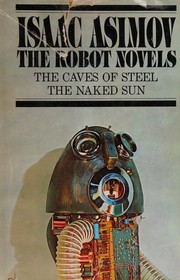
The Robot Novels (1954)
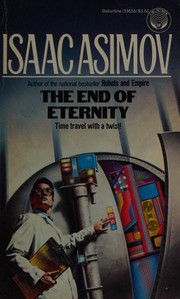
The End of Eternity (1955)
The Death Dealers (1958)

Great Science Fiction by Scientists (1962)
Fact and Fancy (Mar 1962)

Nine Tomorrows (1963)
Adding a Dimension (Jun 1964)

Fantastic Voyage (1966)

Is Anyone There? [37 Essays] (1967)
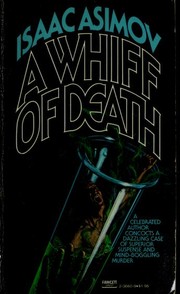
A Whiff of Death (1968)

Mysteries (1968)

Opus 100 (1969)

Twentieth Century Discovery (1969)
The Solar System and Back (Jan 1970)

Treasury of Humor (1971)
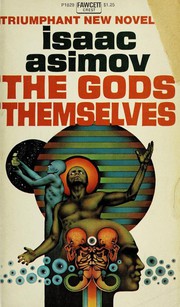
The Gods Themselves (1972)

The Best of Isaac Asimov (1973)
Have You Seen These? (1974)
Of Matters Great and Small (1975)

Murder at the ABA (1976)

Robbie (1976)
Quasar, Quasar, Burning Bright (1978)

A Choice of Catastrophes (1979)
Extraterrestrial Civilizations (1979)
In Memory Yet Green (1979)

Opus 200 (1979)
The Road to Infinity (1979)
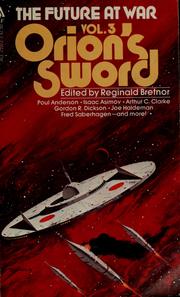
Orion's Sword (1980)

Asimov on Science Fiction (1983)
The Disappearing Man and Other Mysteries (1985)

Fantastic Voyage II: Destination Brain (1987)

Nemesis (Oct 1989)
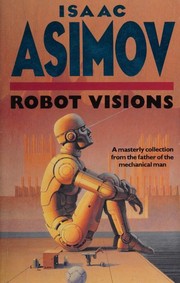
Robot Visions (1990)
Out of the Everywhere (May 1990)
Nightfall (Jun 1990), with Robert Silverberg
Atom: Journey Across the Subatomic Cosmos (1991)
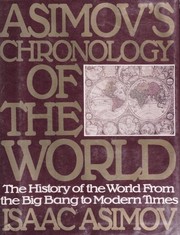
Chronology of the World (1991)
Guide to Earth and Space (1991)

Our Angry Earth (1991)

The Ugly Little Boy (1991), with Robert Silverberg

I. Asimov (1994)

The Last Question (2007)
Novellas in order
Profession (Jul 1957)

The Relativity of Wrong (1988)
Short story collections in order

The Martian Way and Other Stories (1955)

Earth Is Room Enough (1957)

Nightfall and Other Stories (1969)
Up to the Fourth Generation (1969)
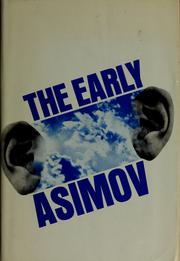
The Early Asimov (1972)
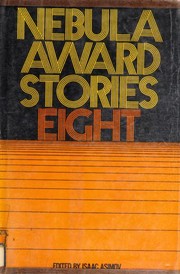
Nebula Award Stories Eight (1973)
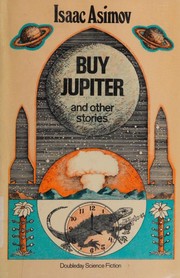
Buy Jupiter and Other Stories (1975)
The Key Word and Other Mysteries (1977)

The Union Club Mysteries (1983)
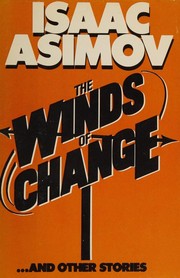
The Winds of Change and Other Stories (1983)

The Edge of Tomorrow [24 Essays and Short Stories] (1985)
The Alternate Asimovs (1986)
The Best Mysteries of Isaac Asimov (1986)
Azazel (1988)

The Asimov Chronicles [50 Short Stories] (1989)
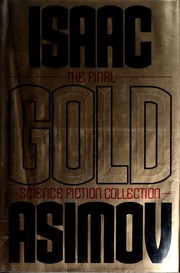
Gold (1995)
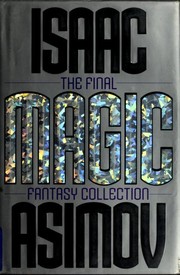
Magic (1995)
Non-fiction in order

The Chemicals of Life (1954)
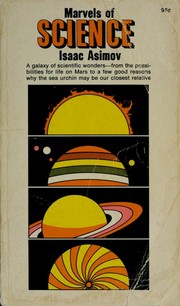
Marvels of Science (1957)

The World of Carbon (1958)
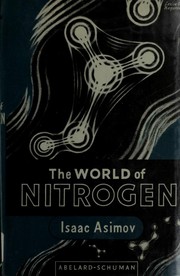
The World of Nitrogen (1958)

The Kingdom of the Sun (1960)
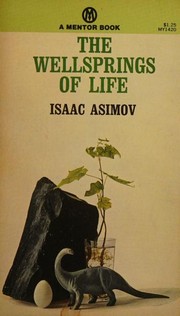
The Wellsprings of Life (1960)

The Intelligent Man's Guide to Science (Oct 1960)
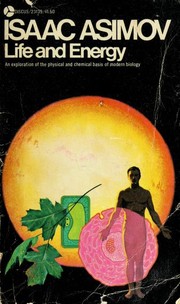
Life and Energy (1962)

The Human Body (1963)

The Human Brain (1963)

Words from the Exodus (1963)

View from a Height (Sep 1963)
A Short History of Biology (1964)

Biographical Encyclopedia of Science and Technology (1964)
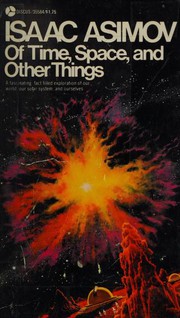
Of Time and Space and Other Things [17 Essays] (1965)
The Noble Gases (1966)
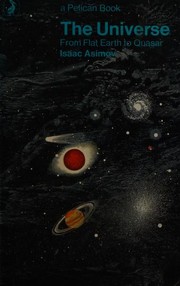
The Universe (1966)
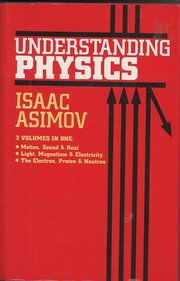
Understanding Physics (1966)

Understanding Physics. Motion, Sound, and Heat (1966)

Science, Numbers, and I (1968)
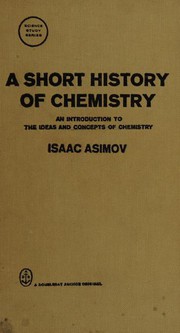
A Short History of Chemistry (1970)

Guide to Shakespeare (1970)
Sensuous Dirty Old Man (1971)

The Stars in Their Courses (1971)

The Left Hand of the Electron (1972)

The Tragedy of the Moon (1973)

Today and Tomorrow and ... [32 Essays] (1973)
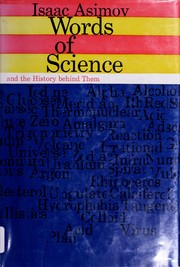
Words of Science, and the History Behind Them (1974)
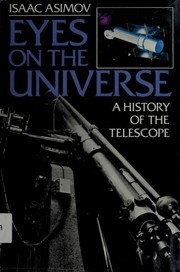
Eyes on the Universe (1975)

Science Past—Science Future (1975)
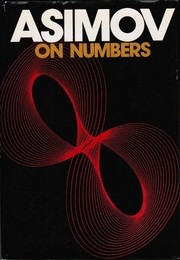
Asimov on Numbers (1977)

The Beginning and the End (1977)
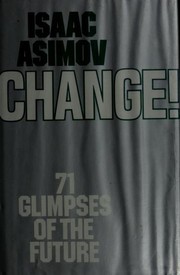
Change! (1981)
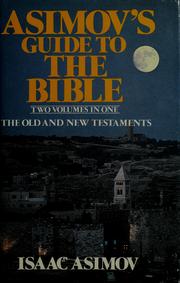
Guide to the Bible (1981)

In the Beginning (1981)

The Sun Shines Bright (Nov 1981)
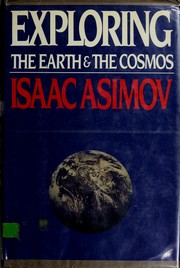
Exploring the Earth and the Cosmos (1982)
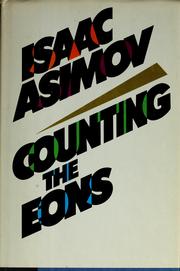
Counting the Eons [17 Essays] (1983)
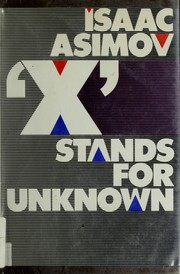
X Stands for Unknown (1984)
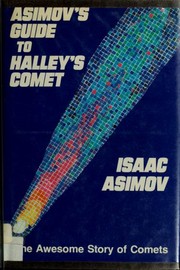
Guide to Halley's Comet (1985)
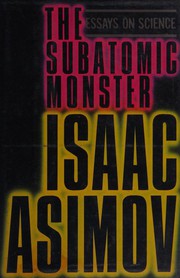
The Subatomic Monster (1985)

Far as Human Eye Could See (1987)

Chronology of Science and Discovery (1989)
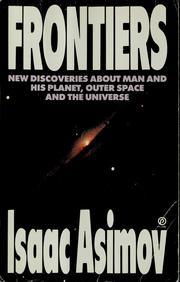
Frontiers (1989)

The March of the Millennia (1990)
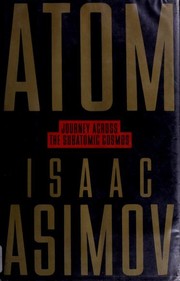
Atom (1991)
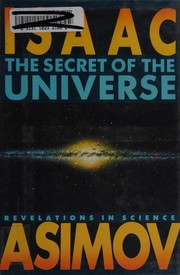
The Secret of the Universe (1991)
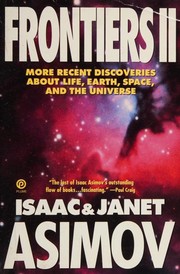
Frontiers II (1993)
Children's books in order
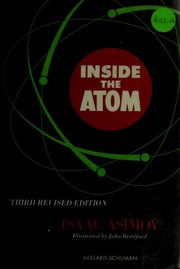
Inside the Atom (1956)

Building Blocks of the Universe (1957)

Breakthroughs in Science (1959)

Realm of Numbers (1959)
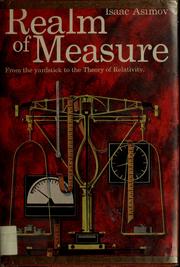
Realm of Measure (1960)

Realm of Algebra (1961)
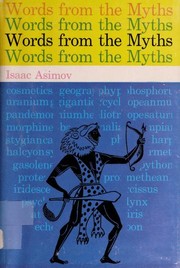
Words from the Myths (1961)

Kite That Won the Revolution (1963)
The Clock We Live on (1963)

Satellites in Outer Space (1964)
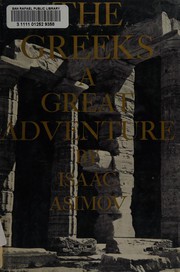
The Greeks (1965)
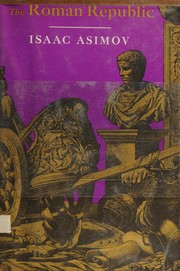
The Roman Republic (1966)

The Egyptians (1967)

The Roman Empire (1967)
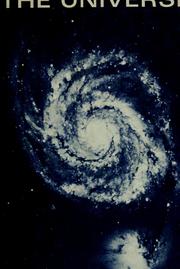
To the Ends of the Universe (1967)

The Dark Ages (1968)

The Near East (1968)
ABC's of Space (1969)
The Shaping of England (1969)

Constantinople (1970)

How Did We Find Out About Dinosaurs? (1973)

Jupiter (1973)

Please Explain (1973)

Earth - Our Crowded Spaceship (1974)
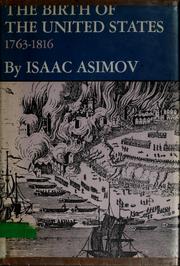
The Birth of the United States, 1763-1816 (1974)

Our Federal Union (1975)

The Collapsing Universe (1977)
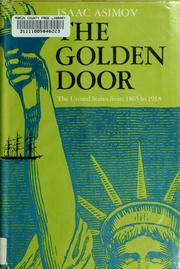
The Golden Door (1977)

About Black Holes (1978)

How Did We Find Out About Antarctica? (1979)

How Did We Find Out About Comets? (1981)
How Did We Find Out About Outer Space? (1981)
Great Ideas of Science (1983)
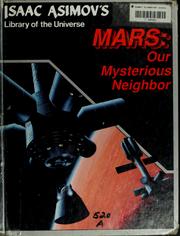
Mars (1988)

Ancient Astronomy (1989)

Think About Space (1989)
Other books in order

Races and People (1955)
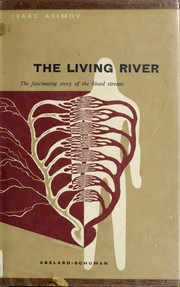
The Living River (1959)
The Double Planet (1960)
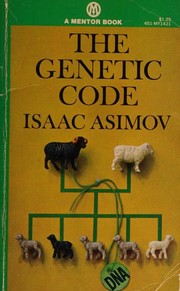
The Genetic Code (1962)
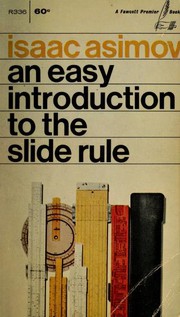
An Easy Introduction to the Slide Rule (1965)
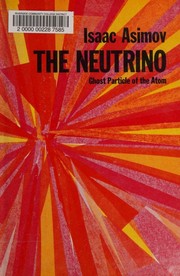
The Neutrino, Ghost Particle of the Atom (1966)
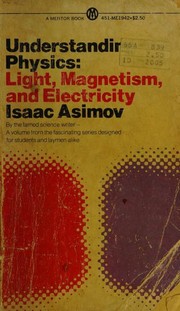
Understanding Physics, Volume Ii (1966)
Un Défilé De Robots (1967)
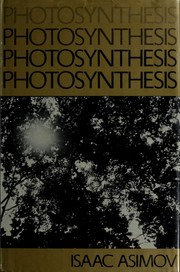
Photosynthesis (1968)
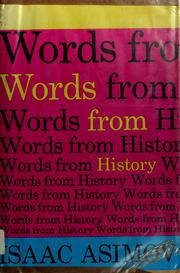
Words from History (1968)
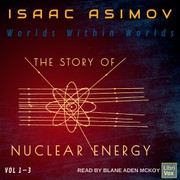
Worlds Within Worlds (1978)
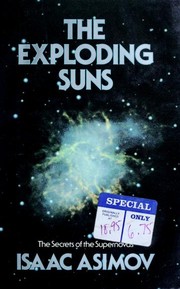
The Exploding Suns (1985)
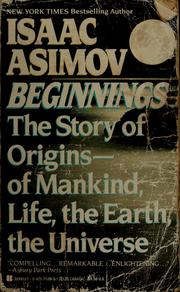
Beginnings (1987)
Film and TV adaptations
- I, Robot (2004)Film · from I, Robot
- I, Robot (2004)Film · from The Caves of Steel
- The End of Eternity (1987)Film · from The End of Eternity
- Bicentennial Man (1999)Film · from The Positronic Man
Free to read
All free classics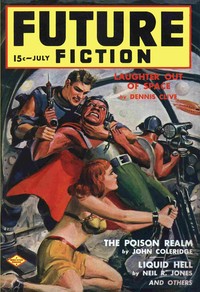
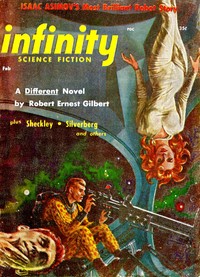
About Isaac Asimov
Isaac Asimov was an American writer and professor of biochemistry at Boston University. During his lifetime, Asimov was considered one of the "Big Three" science fiction writers, along with Robert A. Heinlein and Arthur C. Clarke. He wrote or edited more than 500 books and an estimated 90,000 letters and postcards. Best known for his hard science fiction, Asimov also wrote mysteries and fantasy, as well as popular science and other non-fiction. His work spans nine out of the ten categories of the Dewey decimal system.
Biography from Wikipedia, CC BY-SA 4.0. Photo via Wikimedia Commons.

Isaac Asimov FAQ
- How many books has Isaac Asimov written?
- Isaac Asimov published 75 novels, 8 novellas, 27 short story collections, 48 non-fiction books, 37 children's books and 13 other books that we list, as of September 2026.
- What order should I read Isaac Asimov's books in?
- Read each series in its own order: start Robot with The Caves of Steel, Norby Chronicles with Norby, the Mixed-Up Robot and Foundation with Foundation. The other books stand alone and can be read in any order.
- What is Isaac Asimov's last book?
- I. Asimov (1994).
- What is Isaac Asimov's most famous book?
- Foundation (1951) is Isaac Asimov's most widely read book.
- Are Isaac Asimov's books connected?
- 48 books belong to 6 series (Robot, Norby Chronicles, Foundation and Lucky Starr); the other 160 books stand alone.
- Does Isaac Asimov write under a pen name?
- Yes: Isaac Asimov has also published as Paul French.
- Which Isaac Asimov books have been adapted?
- 4 books have been adapted for film or TV, including I, Robot (film, 2004), The Caves of Steel (as I, Robot, film, 2004), The End of Eternity (film, 1987) and The Positronic Man (as Bicentennial Man, film, 1999).
- Can I read Isaac Asimov's books for free?
- Yes. 7 books by Isaac Asimov are in the public domain in the US and free to read online or download here.
Authors like Isaac Asimov

Alan Arkin
Also wrote children's books and science fiction

Sid Fleischman
Also wrote children's books and science fiction

Carl Sandburg
Also wrote children's books and science fiction

Thomas M. Disch
Also wrote science fiction and children's books

L. Frank Baum
Also wrote children's books and science fiction

Katherine Applegate
Also writes children's books and science fiction
Sources: book lists and dates from Wikidata and Open Library, ratings from Open Library readers, free texts from Project Gutenberg. Last updated September 2026.