
Martin Gardner books in order
American mathematics and science writer
- Lived
- 1914–2010
- Country
- United States
- Books
- 71
- Also writes as
- Armand T. Ringer
Martin Gardner published 7 novels, 1 short story collection, 20 non-fiction books, 10 children's books, 3 poetry collections and 30 other books, beginning with Mathematical Circus (1979).
Updated September 2026
Where to start with Martin Gardner

Start here
Mathematical Circus
Martin Gardner's most-read book.
Standalone novels in order
Fads and Fallacies in the Name of Science (Jun 1957)

The Scientific American Book of Mathematical Puzzles & Diversions (1959)

The Ambidextrous Universe (1964)
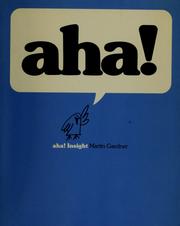
Aha ! Insight (1978)

Puzzles from Other Worlds (1984)
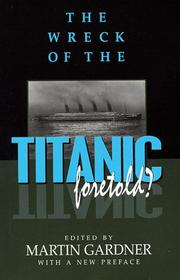
The Wreck of the Titanic Foretold? (1986)
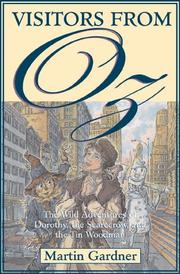
Visitors from Oz (1998)
Short story collections in order

Science Fiction Puzzle Tales (1981)
Non-fiction in order
Fads & Fallacies (1952)
Entertaining Science Experiments with Everyday Objects (1960)

The Sacred Beetle and Other Great Essays in Science (1961)
The Unexpected Hanging (1969)
Mathematical Magic Show (1977)

Science (1981)

Logic Machines and Diagrams (1982)

Order and Surprise (1983)

The Whys of a Philosophical Scrivener (1983)

The New Age (1988)
How Not to Test a Psychic (1989)
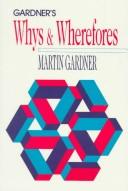
Whys & Wherefores (1989)
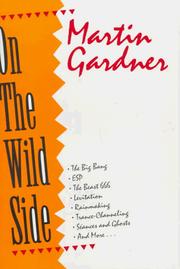
On the Wild Side (1992)
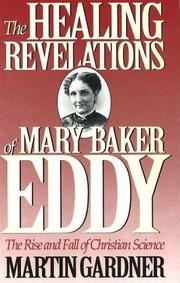
The Healing Revelations of Mary Baker Eddy (1993)
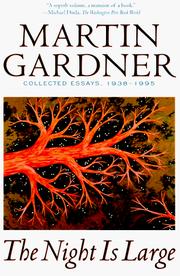
The Night Is Large (1996)
Weird Water & Fuzzy Logic (1996)
Did Adam and Eve Have Navels? (2000)
From the Wandering Jew to William F. Buckley (2000)
Are Universes Thicker Than Blackberries? (2003)

When You Were a Tadpole and I Was a Fish (2009)
Children's books in order
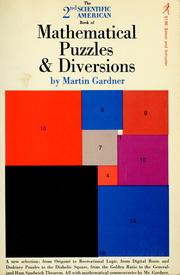
The 2nd Scientific American Book of Mathematical Puzzles & Diversions (1961)
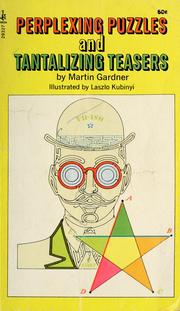
Perplexing Puzzles and Tantalizing Teasers (1969)
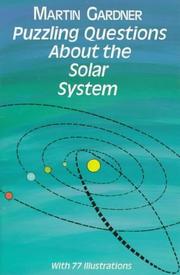
Puzzling Questions About the Solar System (1971)
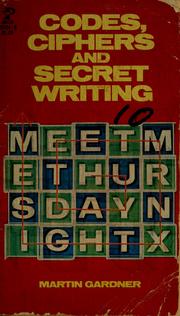
Codes, Ciphers and Secret Writing (1972)
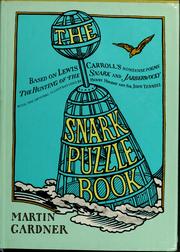
The Snark Puzzle Book (1973)
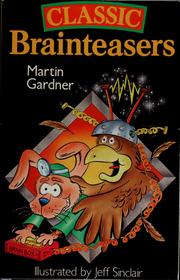
Classic Brainteasers (1994)
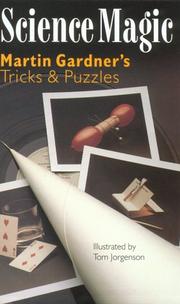
Science Magic (1997)

Mind-Boggling Word Puzzles (2001)

Smart Science Tricks (2004)
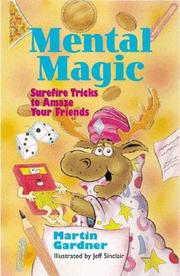
Mental Magic (2009)
Poetry in order
The Annotated Casey at the Bat (1967)

The Annotated Night Before Christmas (1991)
Best Remembered Poems (1992)
Other books in order

Mathematics, Magic and Mystery (1956)
More Mathematical Puzzles of Sam Loyd (1960)

Entertaining Mathematical Puzzles (1961)
The Relativity Explosion (1962)
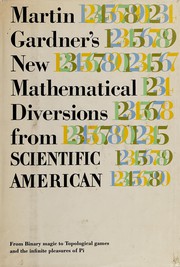
New Mathematical Diversions from Scientific American (1966)
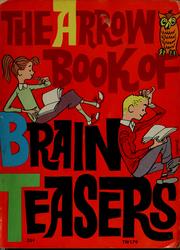
The Arrow Book of Brain Teasers (1967)
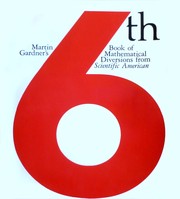
Sixth Book of Mathematical Diversions from Scientific American (1971)
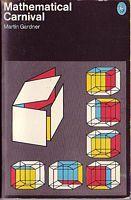
Mathematical Carnival (1975)
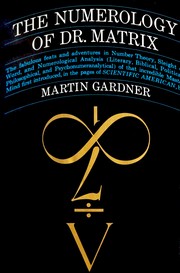
The Numerology of Dr. Matrix (1976)

Encyclopedia of Impromptu Magic (1978)

The Tokyo Puzzles (1978)
Mathematical Circus (1979)
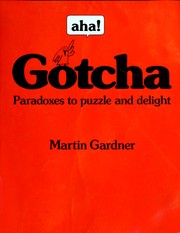
Aha! Gotcha (1980)
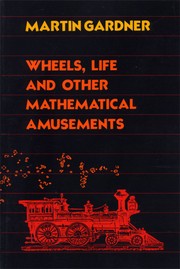
Wheels, Life, and Other Mathematical Amusements (1983)
Knotted Doughnuts and Other Mathematical Entertainments (1986)
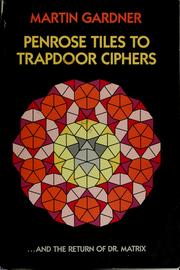
Penrose Tiles to Trapdoor Ciphers (1988)

Time Travel and Other Mathematical Bewilderments (1988)
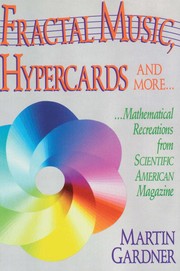
Fractal Music, Hypercards and More (1991)

Martin Gardner Presents (1993)
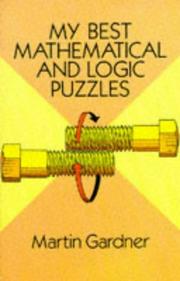
My Best Mathematical and Logic Puzzles (1994)

Urantia (1995)
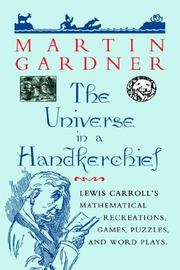
The Universe in a Handkerchief (1996)
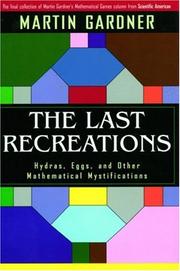
The Last Recreations (1997)

Table Magic (1998)

The Colossal Book of Mathematics (2001)

Mathematical Games (2005)

aha! (2006)
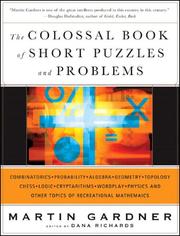
The Colossal Book of Short Puzzles and Problems (2006)

The Jinn from Hyperspace (2008)
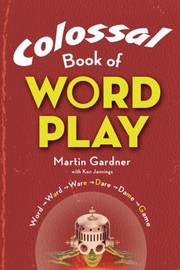
Colossal Book Of Wordplay (2010)
About Martin Gardner
Martin Gardner was an American writer on popular mathematics and popular science. His interests also encompassed magic, scientific skepticism, micromagic, philosophy, religion, and literature – especially the writings of Lewis Carroll, L. Frank Baum, and G. K. Chesterton. He was a leading authority on Lewis Carroll; The Annotated Alice, which incorporated the text of Carroll's two Alice books, was his most successful work and sold over a million copies. He had a lifelong interest in magic and illusion and in 1999, MAGIC magazine named him as one of the "100 Most Influential Magicians of the Twentieth Century". He was considered the doyen of American puzzlers. He was a prolific and versatile author, publishing more than 100 books.
Biography from Wikipedia, CC BY-SA 4.0. Photo via Wikimedia Commons.

Martin Gardner FAQ
- How many books has Martin Gardner written?
- Martin Gardner published 7 novels, 1 short story collection, 20 non-fiction books, 10 children's books, 3 poetry collections and 30 other books that we list, as of September 2026.
- What order should I read Martin Gardner's books in?
- Publication order is a safe choice; the full list is above. Most readers start with Mathematical Circus.
- What is Martin Gardner's last book?
- When You Were a Tadpole and I Was a Fish (2009).
- What is Martin Gardner's most famous book?
- Mathematical Circus (1979) is Martin Gardner's most widely read book.
- Does Martin Gardner write under a pen name?
- Yes: Martin Gardner has also published as Armand T. Ringer.
Sources: book lists and dates from Wikidata and Open Library, ratings from Open Library readers. Last updated September 2026.