
Philip K. Dick books in order
American science fiction author
- Lived
- 1928–1982
- Country
- United States
- Books
- 74
- Series
- 2
- Also writes as
- Jack Dowland, Richard Phillipps
Philip K. Dick published 49 novels, 3 novellas and 22 short story collections, beginning with Solar Lottery (1955). The 2 series include The Collected Stories of Philip K. Dick (5 books, starting with Beyond Lies the Wub) and VALIS trilogy (3 books, starting with Valis). The best-known is Do Androids Dream of Electric Sheep? (1968).
Updated September 2026
The Collected Stories of Philip K. Dick books in order (5)Series page
Reading order: 1 Beyond Lies the Wub (1988) · 3 The Father-Thing (1989) · 3 Second Variety (1991) · 4 The Days of Perky Pat (1991) · The Little Black Box (1990)
- 1.

Beyond Lies the Wub (1988)
- 3.
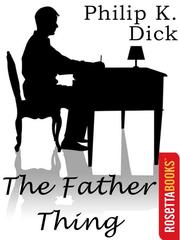
The Father-Thing (1989)
- 3.
Second Variety (1991)
- 4.
The Days of Perky Pat (1991)

The Little Black Box (1990)
VALIS trilogy books in order (3)Series page
Reading order: 1 Valis (1981) · 2 The Divine Invasion (1981) · 3 The Transmigration of Timothy Archer (1982)
- 1.
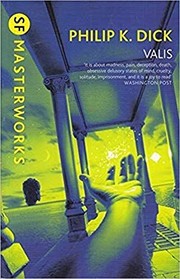
Valis (Feb 1981)
- 2.
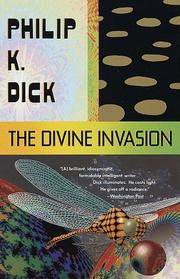
The Divine Invasion (Jun 1981)
- 3.

The Transmigration of Timothy Archer (Mar 1982)
Where to start with Philip K. Dick

Start here
Do Androids Dream of Electric Sheep?
Philip K. Dick's most-read book, rated by 161 Open Library readers.

Shortest way in
Galactic Pot-Healer
One of the most-read, at about 183 pages.
Standalone novels in order
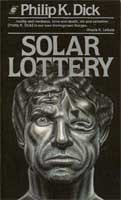
Solar Lottery (1955)

The Man Who Japed (1956)
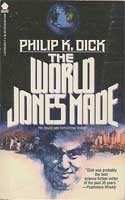
The World Jones Made (1956)
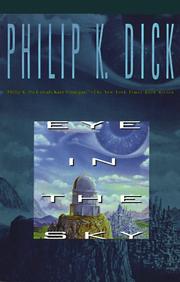
Eye in the Sky (1957)

Time Out of Joint (1959)

Dr. Futurity (1960)
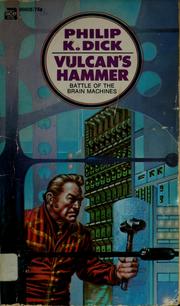
Vulcan's Hammer (1960)
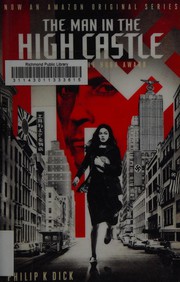
The Man in the High Castle (Oct 1962)

The Game-Players of Titan (1963)
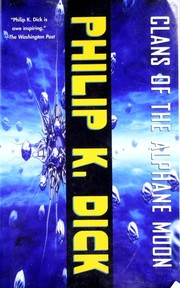
Clans of the Alphane Moon (1964)
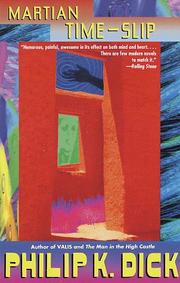
Martian Time-Slip (1964)
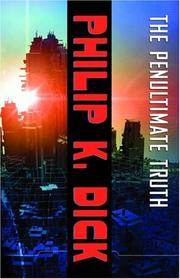
The Penultimate Truth (1964)
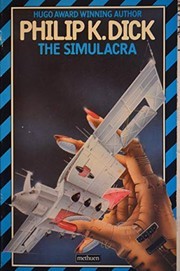
The Simulacra (1964)
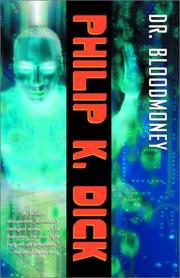
Dr. Bloodmoney (1965)
The Three Stigmata of Palmer Eldritch (1965)

Now Wait for Last Year (1966)
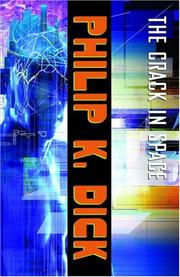
The Crack in Space (1966)
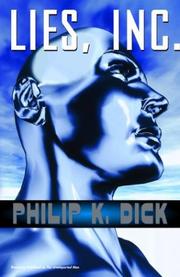
The Unteleported Man (1966)

Counter-Clock World (1967)

Project Plowshare (1967)

The Ganymede Takeover (1967)
Do Androids Dream of Electric Sheep? (1968)
Galactic Pot-Healer (1969)
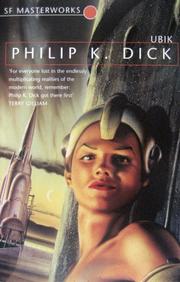
Ubik (1969)
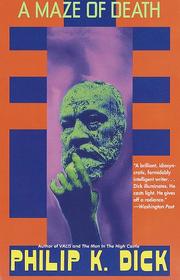
A Maze of Death (1970)

Our Friends from Frolix 8 (1970)
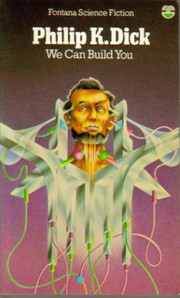
The First in Our Family (1972)
Flow My Tears, the Policeman Said (Feb 1974)
Confessions of a Crap Artist (1975)

Deus Irae (1976), with Roger Zelazny
A Scanner Darkly (Jan 1977)
The Man Whose Teeth Were All Exactly Alike (1984)
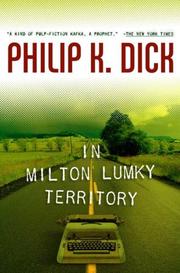
In Milton Lumky Territory (1985)
Puttering About in a Small Land (1985)

VALISystem A (1985)

Humpty Dumpty in Oakland (1986)

Mary and the Giant (1987)

The Broken Bubble of Thisbe Holt (1988)

Gather Yourselves Together (1994)

The Shifting Realities of Philip K. Dick (1995)
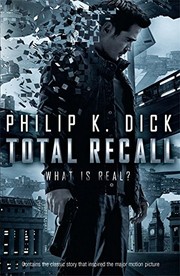
Total Recall (1996)
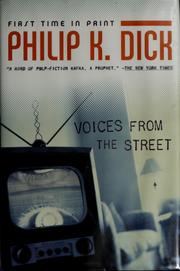
Voices from the Street (2007)

The Early Work of Philip K. Dick (2008)
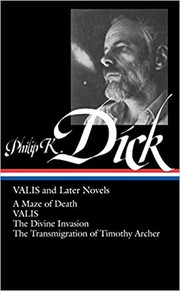
Valis and Later Novels (2009)

Philip K. Dick Resurrected (2010)
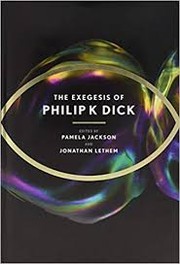
The Exegesis of Philip K. Dick (2011)
Novellas in order

The Variable Man (Jul 1953)

The Cosmic Puppets (1957)
Nick and the Glimmung (1988)
Short story collections in order

A Handful of Darkness (1955)
The Variable Man (1957)

The Preserving Machine (1969)
The Book of Philip K. Dick (1973)

The Best of Philip K. Dick (1977)
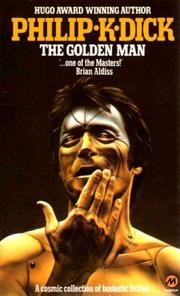
The Golden Man (1980)
Robots, Androids, and Mechanical Oddities (1984)

I Hope I Shall Arrive Soon (1985)
Second Variety (1989)
The Short Happy Life of the Brown Oxford (1990)
We Can Remember It for You Wholesale (1990)
The Eye of the Sibyl (1992)
The Philip K. Dick Reader (1997)
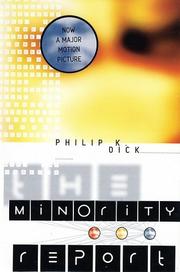
Minority Report (2002)
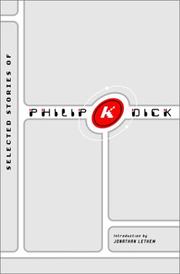
Selected Stories of Philip K. Dick (2002)
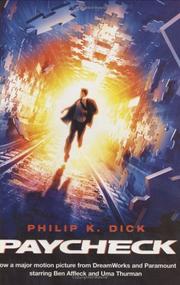
Paycheck (2003)

The Collected Stories of Philip K. Dick (2010)
Film and TV adaptations
- The Man in the High CastleTV · from The Man in the High Castle
- Blade Runner (1982)Film · from Do Androids Dream of Electric Sheep?
- Confessions d'un Barjo (1992)Film · from Confessions of a Crap Artist
- A Scanner Darkly (2006)Film · from A Scanner Darkly
- Radio Free Albemuth (2010)Film · from VALISystem A
Free to read
All free classics

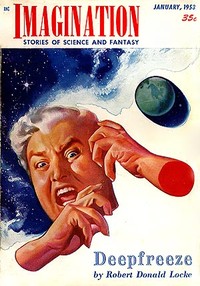





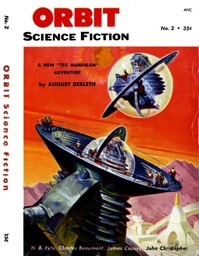
About Philip K. Dick
Philip Kindred Dick was an American science fiction short story writer and novelist. He wrote 45 novels and about 121 short stories, most of which appeared in science fiction magazines. His fiction explored varied philosophical and social questions such as the nature of reality, perception, human nature, and identity, and commonly featured characters struggling against alternate realities, illusory environments, monopolistic corporations, drug abuse, authoritarian governments, and altered states of consciousness. He is considered one of the most important figures in 20th-century science fiction.
Biography from Wikipedia, CC BY-SA 4.0. Photo via Wikimedia Commons.

Philip K. Dick FAQ
- How many books has Philip K. Dick written?
- Philip K. Dick published 49 novels, 3 novellas and 22 short story collections that we list, as of September 2026.
- What order should I read Philip K. Dick's books in?
- Read each series in its own order: start The Collected Stories of Philip K. Dick with Beyond Lies the Wub and VALIS trilogy with Valis. The other books stand alone and can be read in any order.
- What is Philip K. Dick's last book?
- The Man Whose Teeth Were All Exactly Alike (1984).
- What is Philip K. Dick's most famous book?
- Do Androids Dream of Electric Sheep? (1968) is Philip K. Dick's most widely read book.
- Are Philip K. Dick's books connected?
- 8 books belong to 2 series (The Collected Stories of Philip K. Dick and VALIS trilogy); the other 66 books stand alone.
- Does Philip K. Dick write under a pen name?
- Yes: Philip K. Dick has also published as Jack Dowland and Richard Phillipps.
- Which Philip K. Dick books have been adapted?
- 5 books have been adapted for film or TV, including The Man in the High Castle (TV), Do Androids Dream of Electric Sheep? (as Blade Runner, film, 1982), Confessions of a Crap Artist (as Confessions d'un Barjo, film, 1992) and A Scanner Darkly (film, 2006).
- Can I read Philip K. Dick's books for free?
- Yes. 13 books by Philip K. Dick are in the public domain in the US and free to read online or download here.
Authors like Philip K. Dick

Margaret Atwood
Also writes speculative fiction and science fiction

Edson McCann
Also wrote science fiction and speculative fiction

Anne McCaffrey
Also wrote science fiction and speculative fiction

Jack Williamson
Also wrote science fiction and speculative fiction

Octavia E. Butler
Also wrote science fiction and speculative fiction

Thomas M. Disch
Also wrote science fiction and speculative fiction
Sources: book lists and dates from Wikidata and Open Library, ratings from Open Library readers, free texts from Project Gutenberg. Last updated September 2026.