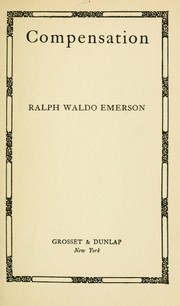
Compensation
- First published
- 1900
- Reading level
- Plain English
- Price
- Free
About the book
"Compensation: Being an Essay as Written by Ralph Waldo Emerson" is a philosophical essay penned by Ralph Waldo Emerson during the early 20th century. This work delves into the concept of justice and balance in human life, focusing on the idea that all actions carry inherent consequences and that life operates on a principle of give-and-take. Emerson, a central figure in the Transcendentalist movement, draws upon observations from nature, human behavior, and moral philosophy to illustrate this enduring principle. In "Compensation," Emerson argues that for every pleasure or advantage gained, a corresponding burden or responsibility must be acknowledged. He discusses how life's dualities—such as good and evil, success and failure—are in constant interplay, shaping individual experiences and societal dynamics. Throughout the essay, Emerson uses a variety of examples, from personal virtues to societal laws, to demonstrate that justice is not only necessary but omnipresent. He emphasizes that every action has repercussions that can be felt immediately or unfold over time, ultimately reinforcing the notion that the universe maintains balance, and that true fulfillment comes from understanding and accepting this law of compensation.
- American essays
Updated September 2026. Public domain in the USA. Text and summary from Project Gutenberg eBook #73035. Compensation on Wikipedia.
More free books by Ralph Waldo Emerson
About Ralph Waldo EmersonEssays by Ralph Waldo Emerson
Nature
Essays — First Series
Poems
Essays — Second Series
Representative Men
Society and solitude
The Conduct of Life
Rubáiyát of Omar Khayyám, and Salámán and Absál
Letters and social aims
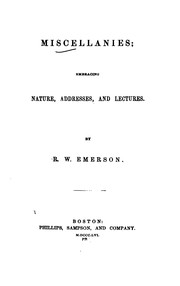
Miscellanies
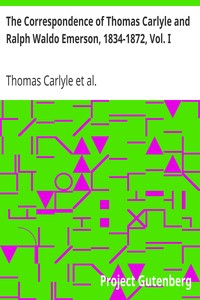
The Correspondence of Thomas Carlyle and Ralph Waldo Emerson, 1834-1872, Vol. I