Letters to His Son, 1749
by Philip Stanhope, 4th Earl of Chesterfield
- First published
- 1775
- Reading level
- Fairly demanding
- Price
- Free
About the book
"Letters to His Son" by Earl of Chesterfield is a collection of epistolary advice crafted in the mid-18th century. The letters, directed primarily at Chesterfield's illegitimate son, explore the vital traits, skills, and knowledge needed to navigate the realms of society and demonstrate refinement as a gentleman. The work emphasizes the importance of good manners, education in the arts and sciences, and the subtleties of social interaction. The beginning of "Letters to His Son" introduces the format of the correspondence, highlighting Chesterfield's deep concern for his son's education and future conduct. In his letters, Chesterfield discusses various topics, including financial management, the pursuit of knowledge, and the cultivation of a graceful demeanor. He advises on maintaining a balance between rational pleasures and moral virtues while firmly instructing his son in the ways of politeness and etiquette. The letters serve as both practical guidance and philosophical reflections on personal development as Chesterfield wishes to instill prudence and good sense in his son’s character, evident in the detailed instructions he provides regarding social behaviors, learning opportunities, and the art of pleasing others.
- Conduct of life
Updated September 2026. Public domain in the USA. Text and summary from Project Gutenberg eBook #3353.
More free books by Philip Stanhope, 4th Earl of Chesterfield
About Philip Stanhope, 4th Earl of ChesterfieldLetters to His Son, Complete
Letters, sentences and maxims
Quotes and Images from Chesterfield's Letters to His Son
Letters to His Son, 1748
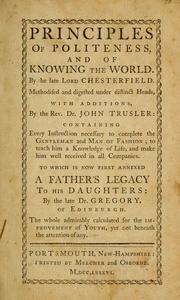
Principles of politeness, and of knowing the world
Letters to His Son, 1746-47
Letters to His Son, 1752
Letters to His Son, 1750
Letters to His Son, 1751
Letters to His Son, 1753-54
Widger's Quotations from the Project Gutenberg Editions of the Works of Lord Chesterfield
Letters to His Son, 1766-71