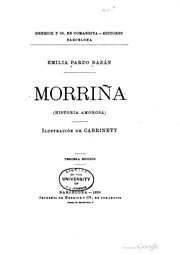
Morriña (Homesickness)
- First published
- 1889
- Reading level
- Plain English
- Price
- Free
About the book
"Morriña (Homesickness)" by Emilia Pardo Bazán is a novel written in the late 19th century. The story revolves around Doña Aurora de Pardiñas and her delicate son Rogelio, exploring themes of nostalgia, family, and the emotional struggles associated with homesickness. The narrative delves into their life in Madrid, characterized by the mother's unwavering affection and concern for her son, who is grappling with his identity and feelings of longing for Galicia, his homeland. At the start of the novel, we are introduced to the mundane yet intimate world of Doña Aurora and her son Rogelio as they navigate their daily routines in Madrid. Doña Aurora sits by the window, closely observing Rogelio as he attends university lectures, reflecting a mother's pride but also a deep-seated anxiety over his health. The opening describes their home filled with lighthearted banter and warmth, contrasting sharply with their underlying struggles—Doña Aurora's guilt about her son’s fragile health and Rogelio's yearning for his native Galicia. As they attempt to foster a sense of normalcy, the entry of a Galician girl, Esclavita, seeking work brings forth themes of belonging and identification, further illustrating the ties to their homeland that influence their collective experiences of homesickness.
- Love stories
- Mothers and sons
- Spanish fiction
Updated September 2026. Public domain in the USA. Text and summary from Project Gutenberg eBook #54742.