The Philosophy of Giambattista Vico
- First published
- 1913
- Reading level
- Fairly demanding
- Price
- Free
About the book
"The Philosophy of Giambattista Vico" by Benedetto Croce is a scholarly exposition on the philosophical ideas of Giambattista Vico, written in the early 20th century. The book explores Vico's critique of Cartesian thought, emphasizing the importance of history, language, imagination, and the moral sciences. Croce aims to provide a fresh interpretation of Vico's contributions to philosophy, asserting their relevance to modern thought. The opening of the work establishes the framework for an in-depth analysis of Vico's philosophy, particularly his criticism of Descartes' reliance on mathematical reasoning as the highest form of knowledge. Instead, Vico advocates for a recognition of knowledge rooted in human experience and history ("verum ipsum factum"). He introduces the concept that true understanding of human affairs arises from the acknowledgment that humans create the world they seek to understand, and thus possess a unique perspective that divine knowledge encompasses. This sets the stage for a broader discussion on how knowledge in the moral sciences, history, and even the arts can achieve greatness through their imaginative and constructive elements, opposing the more rigid frameworks of the Cartesian approach.
- Vico, Giambattista, 1668-1744
Updated September 2026. Public domain in the USA. Text and summary from Project Gutenberg eBook #52814.
More free books by Benedetto Croce
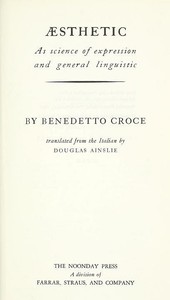
About Benedetto CroceÆsthetic as science of expression and general linguistic
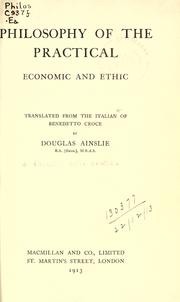
The Philosophy of the Practical
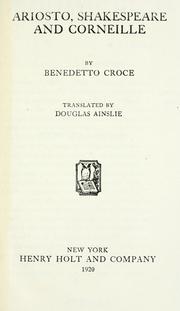
Ariosto, Shakespeare and Corneille
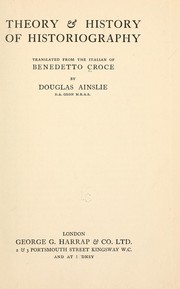
Theory & History of Historiography
Aesthetic as Science of Expression and General Linguistic
Logic as the Science of the Pure Concept
Historical materialism and the economics of Karl Marx