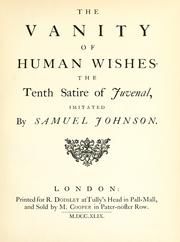
The Vanity of Human Wishes (1749) and Two Rambler papers (1750)
- First published
- 1749
- Reading level
- Plain English
- Price
- Free
About the book
"The Vanity of Human Wishes (1749) and Two Rambler papers (1750) by Samuel Johnson" is a collection of moral essays and poetry written in the 18th century, specifically during the early to mid-1700s, which is marked by the Enlightenment's intellectual vigor. The primary focus of the book is the nature of human desires and the inevitable disappointments that accompany them, exploring profound philosophical themes of ambition, fate, and morality, while also offering insights into social conduct and the human condition. In "The Vanity of Human Wishes," Johnson creatively adapts Juvenal's Tenth Satire to reflect on the futility of human aspirations, highlighting how desires often lead to suffering and regret. The poem features a series of vivid portraits, including historical figures like Cardinal Wolsey and Charles XII of Sweden, showcasing their rises and falls fueled by ambition and desire. The accompanying "Rambler" papers present Johnson's reflections on various aspects of life, such as the quest for happiness and the importance of virtue, frequently emphasizing the need for self-awareness and moral integrity. Together, these works encapsulate Johnson’s belief that true contentment arises not from external achievements but from an inner state of virtue and resignation to fate.
- Poetry
- Essays
Updated September 2026. Public domain in the USA. Text and summary from Project Gutenberg eBook #13350. The Vanity of Human Wishes (1749) and Two Rambler papers (1750) on Wikipedia.
More free books by Samuel Johnson
About Samuel JohnsonRasselas, Prince of Abyssinia
The Works of Samuel Johnson, LL.D. in Nine Volumes, Volume 02
Preface to Shakespeare
Shorter novels, vol. 3
Notes to Shakespeare, Volume III
The Works of Samuel Johnson, LL.D. in Nine Volumes, Volume 04
Dr. Johnson's Works
The Works of Samuel Johnson, LL.D. in Nine Volumes, Volume 03
A Journey to the Western Islands of Scotland
The Works of Samuel Johnson, LL.D. in Nine Volumes, Volume 08
The Works of Samuel Johnson, LL.D. in Nine Volumes, Volume 05
The Works of Samuel Johnson, in Sixteen Volumes. Volume 04