
Joseph Priestley books in order
English chemist, theologian, educator, and political theorist
- Lived
- 1733–1804
- Country
- United Kingdom
- Books
- 45
Joseph Priestley published 3 novels, 1 novella, 24 non-fiction books and 17 other books, beginning with A Course of Lectures on the Theory of Language and Universal Grammar (1762). The best-known is The History and Present State of Electricity (1767).
Updated September 2026
Where to start with Joseph Priestley
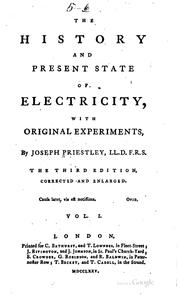
Start here
The History and Present State of Electricity
Joseph Priestley's most-read book.
Standalone novels in order
Essay on a Course of Liberal Education for Civil and Active Life (1765)
The History and Present State of Electricity (1767)
Institutes of Natural and Revealed Religion (1772)
Novellas in order

The Discovery of Oxygen, Part 1.: Experiments (1775)
Non-fiction in order

A Description of a Chart of Biography: By Joseph Priestley (1764)
Essay on the First Principles of Government (1768)

A View of the Principles and Conduct of the Protestant Dissenters (1769)
Remarks on Some Paragraphs in the Fourth Volume of Dr. Blackstone's Commentaries on the Laws of England Relating to the Dissenters (1769)
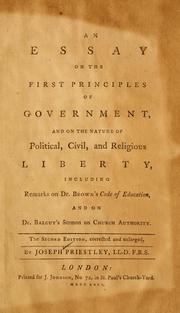
An Essay on the First Principles of Government, and on the Nature of Political, Civil, and Religious Liberty, Including Remarks on Dr. Brown's Code of Education, and on Dr. Balguy's Sermon on Church Authority (1771)

The History and Present State of Discoveries Relating to Vision, Light, and Colours (1772)
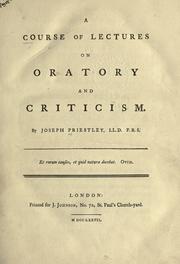
A Course of Lectures on Oratory and Criticism (1777)

A Description of a New Chart of History (1777)
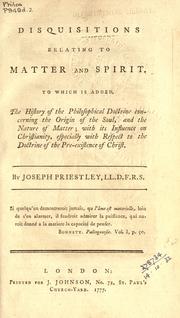
Disquisitions Relating to Matter and Spirit (1777)

Miscellaneous Observations Relating to Education (1778)
Letters to the Jews (1786)

Familiar Letters, Addressed to the Inhabitants of Birmingham,: In Refutation of Several Charges (1790)
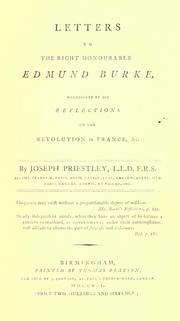
Letters to the Right Honourable Edmund Burke (1791)

A Continuation of the Letters to the Philosophers and Politicians of France on the Subject of Religion, and of the Letters to a Philosophical Unbeliever in Answer to Mr. Paine's Age of Reason (1794)

A Familiar Illustration of Certain Passages of Scripture Relating to the Power of Man to Do the (1794)

Discourses on the Evidence of Revealed Religion (1794)
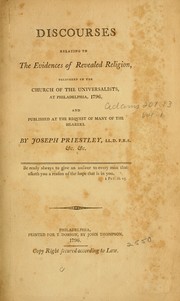
Discourses Relating to the Evidences of Revealed Religion (1794)
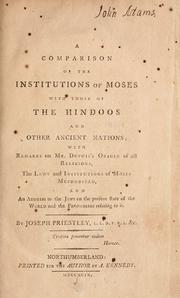
A Comparison of the Institutions of Moses with Those of the Hindoos and Other Ancient Nations (1799)

A General History of the Christian Church (1802)
A Description of a System of Biography (1803)

Socrates and Jesus Compared (1803)
The Doctrines of Heathen Philosophy, Compared with Those of Revelation (1804)

A History of the Corruptions of Christianity (1838)
Other books in order
A Course of Lectures on the Theory of Language and Universal Grammar (1762)

Letters to a Philosophical Unbeliever (1767)

A Familiar Introduction to the Study of Electricity (1768)
A Free Address to Protestant Dissenters, on the Subject of the Lord's Supper (1768)
The Rudiments of English Grammar (1768)
The History and Present State of Electricity, with Original Experiments (1769)

A Familiar Introduction to the Theory and Practice of Perspective (1770)
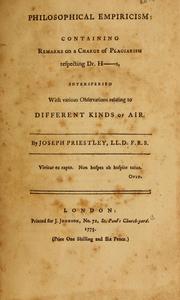
Philosophical Empiricism (1775)
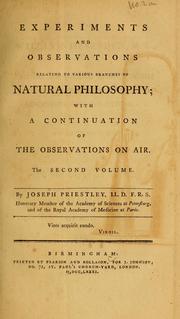
Experiments and Observations Relating to Various Branches of Natural Philosophy (1779)

Defences of Unitarianism for the Years 1788 & 1789 (1789)
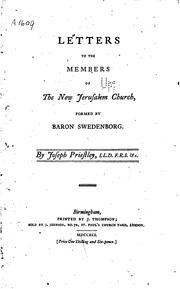
Letters to the Members of the New Jerusalem Church Formed by Baron Swedenborg (1791)
Observations on the Increase of Infidelity (1791)
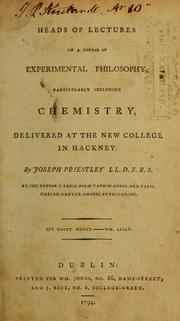
Heads of Lectures on a Course of Experimental Philosophy, Particularly Including Chemistry, Delivered at the New College in Hackney (1794)

Considerations on the Doctrine of Phlogiston, and the Decomposition of Water (1796)
The Doctrine of Phlogiston Established, and That of the Composition of Water Refuted (1800)
Lectures On History And General Policy (2007)
Free to read
All free classics
About Joseph Priestley
Joseph Priestley was an English chemist, Unitarian, natural philosopher, separatist theologian, grammarian, multi-subject educator and classical liberal political theorist. He published over 150 works, and conducted experiments in several areas of science.
Biography from Wikipedia, CC BY-SA 4.0. Photo via Wikimedia Commons.
Joseph Priestley FAQ
- How many books has Joseph Priestley written?
- Joseph Priestley published 3 novels, 1 novella, 24 non-fiction books and 17 other books that we list, as of September 2026.
- What order should I read Joseph Priestley's books in?
- Publication order is a safe choice; the full list is above. Most readers start with The History and Present State of Electricity.
- What is Joseph Priestley's last book?
- Memoirs of Dr. Joseph Priestley (1806).
- What is Joseph Priestley's most famous book?
- The History and Present State of Electricity (1767) is Joseph Priestley's most widely read book.
- Can I read Joseph Priestley's books for free?
- Yes. 3 books by Joseph Priestley are in the public domain in the US and free to read online or download here.
Authors like Joseph Priestley


Sources: book lists and dates from Wikidata and Open Library, ratings from Open Library readers, free texts from Project Gutenberg. Last updated September 2026.