
William Gibson books in order
American-Canadian speculative fiction writer
- Born
- 1948
- Country
- United States
- Books
- 19
- Series
- 3
William Gibson has published 15 novels, 2 novellas, 1 short story collection and 1 play, beginning with Neuromancer (1984). The 3 series include Sprawl trilogy (3 books, starting with Neuromancer), Bridge trilogy (3 books, starting with Virtual Light) and Hubertus Bigend trilogy (3 books, starting with Pattern Recognition). The latest is Agency (2020).
Updated September 2026
Sprawl trilogy books in order (3)Series page
Reading order: 1 Neuromancer (1984) · 2 Count Zero (1986) · 3 Mona Lisa Overdrive (1988)
- 1.

Neuromancer (Jul 1984)
- 2.
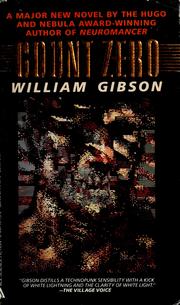
Count Zero (Jan 1986)
- 3.
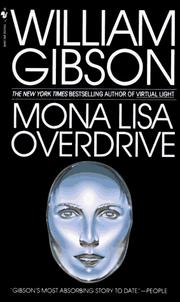
Mona Lisa Overdrive (Jun 1988)
Bridge trilogy books in order (3)Series page
Reading order: 1 Virtual Light (1993) · 2 Idoru (1996) · 3 All Tomorrow's Parties (1999)
- 1.
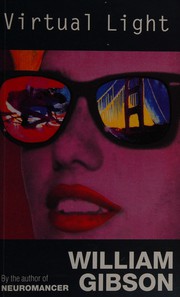
Virtual Light (Sep 1993)
- 2.
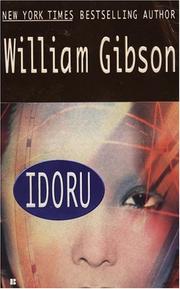
Idoru (Sep 1996)
- 3.
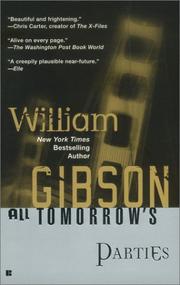
All Tomorrow's Parties (Oct 1999)
Hubertus Bigend trilogy books in order (3)Series page
Reading order: 1 Pattern Recognition (2003) · 2 Spook Country (2007) · 3 Zero History (2010)
- 1.
Pattern Recognition (Feb 2003)
- 2.
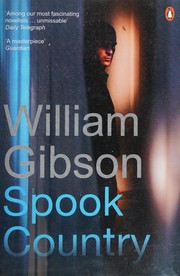
Spook Country (Jul 2007)
- 3.

Zero History (Sep 2010)
Where to start with William Gibson
Start here
Neuromancer
William Gibson's most-read book and the first of the 3 Sprawl trilogy books.

Highest rated
The Peripheral
Rated 4.1 out of 5 by 40 readers.
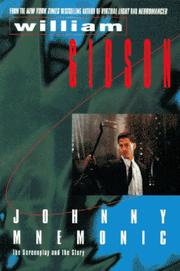
Shortest way in
Johnny Mnemonic
One of the most-read, at about 162 pages.
Standalone novels in order
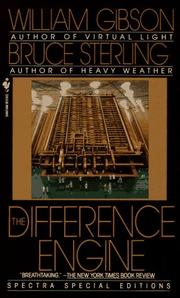
The Difference Engine (Sep 1990), with Bruce Sterling
Agrippa (Dec 1992)
Johnny Mnemonic (1995)
Distrust That Particular Flavor (2012)
The Peripheral (Oct 2014)
Agency (Jan 2020)
Novellas in order
Archangel (2017)
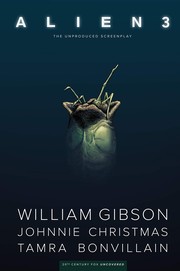
Alien 3 (2019)
Short story collections in order

Burning Chrome (1986)
Plays in order
GURPS Cyberpunk (1990)
Film and TV adaptations
- NeuromancerTV · from Neuromancer
- The PeripheralTV · from The Peripheral
About William Gibson
William Ford Gibson is an American and Canadian speculative fiction writer and essayist widely credited with pioneering the science fiction subgenre known as cyberpunk, a category from which he has repeatedly distanced himself. Beginning his writing career in the late 1970s, his early works were noir, near-future stories that explored the effects of technology, cybernetics, and computer networks on humans, a "combination of lowlife and high tech"—and helped to create an iconography for the Information Age before the ubiquity of the Internet in the 1990s. Gibson coined the term "cyberspace" for "widespread, interconnected digital technology" in his short story "Burning Chrome" (1982), and later popularized the concept, along with his usage of the "matrix", in his acclaimed debut novel Neuromancer (1984). These early works of Gibson's have been credited with "renovating" science fiction literature in the 1980s.
Biography from Wikipedia, CC BY-SA 4.0. Photo via Wikimedia Commons.
William Gibson FAQ
- How many books has William Gibson written?
- William Gibson has published 15 novels, 2 novellas, 1 short story collection and 1 play that we list, as of September 2026.
- What order should I read William Gibson's books in?
- Read each series in its own order: start Sprawl trilogy with Neuromancer, Bridge trilogy with Virtual Light and Hubertus Bigend trilogy with Pattern Recognition. The other books stand alone and can be read in any order.
- What is William Gibson's latest book?
- Agency (2020).
- What is William Gibson's most famous book?
- Neuromancer (1984) is William Gibson's most widely read book.
- Are William Gibson's books connected?
- 9 books belong to 3 series (Sprawl trilogy, Bridge trilogy and Hubertus Bigend trilogy); the other 10 books stand alone.
- Which William Gibson books have been adapted?
- 2 books have been adapted for film or TV, including Neuromancer (TV) and The Peripheral (TV).
Authors like William Gibson


Sources: book lists and dates from Wikidata and Open Library, ratings from Open Library readers. Last updated September 2026.