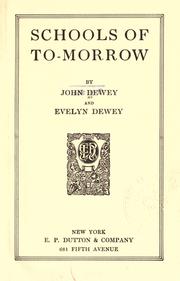
Schools of to-morrow
by John Dewey and Evelyn Dewey
- First published
- 1915
- Reading level
- Fairly demanding
- Price
- Free
About the book
"Schools of To-morrow" by John Dewey and Evelyn Dewey is an educational treatise written in the early 20th century. This work explores progressive approaches to education, emphasizing the need for schools to adapt to the natural development and needs of children rather than adhering strictly to traditional practices. The authors introduce various educational reforms and illustrate how schools can cultivate a more meaningful and effective learning environment. The opening of the book establishes the authors' aim to provide a realistic portrayal of innovative educational practices. It outlines their intention to show how various educational theories are applied in actual classrooms, emphasizing the importance of experiential learning. The text highlights the detrimental effects of a rigid educational structure that often prioritizes adult expectations over children's developmental needs. In particular, Dewey and Dewey reference Rousseau's ideas to argue that true education should foster innate capabilities and allow children to learn through active exploration, rather than through forced memorization and rote learning. They set the stage for discussing specific schools and methods that embrace these principles, thereby challenging conventional educational norms.
- Education
Updated September 2026. Public domain in the USA. Text and summary from Project Gutenberg eBook #48906.
More free books by John Dewey
About John DeweyDemocracy and Education
How We Think
Human Nature and Conduct
The public and its problems
The School and Society
Ethics
Leibniz's New Essays Concerning the Human Understanding
Reconstruction in Philosophy
Moral Principles in Education
Creative Intelligence
Essays in Experimental Logic
The Child and the Curriculum